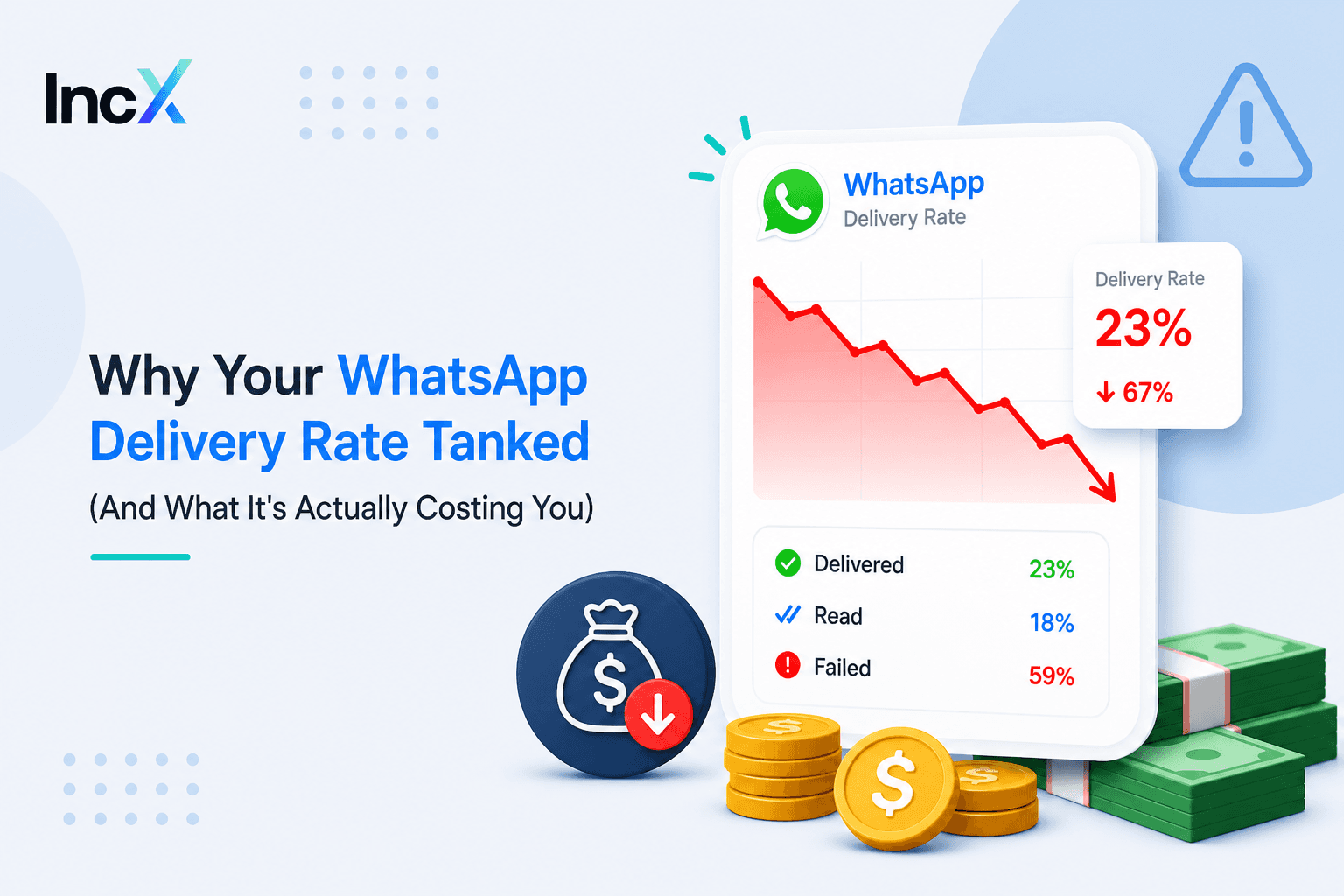
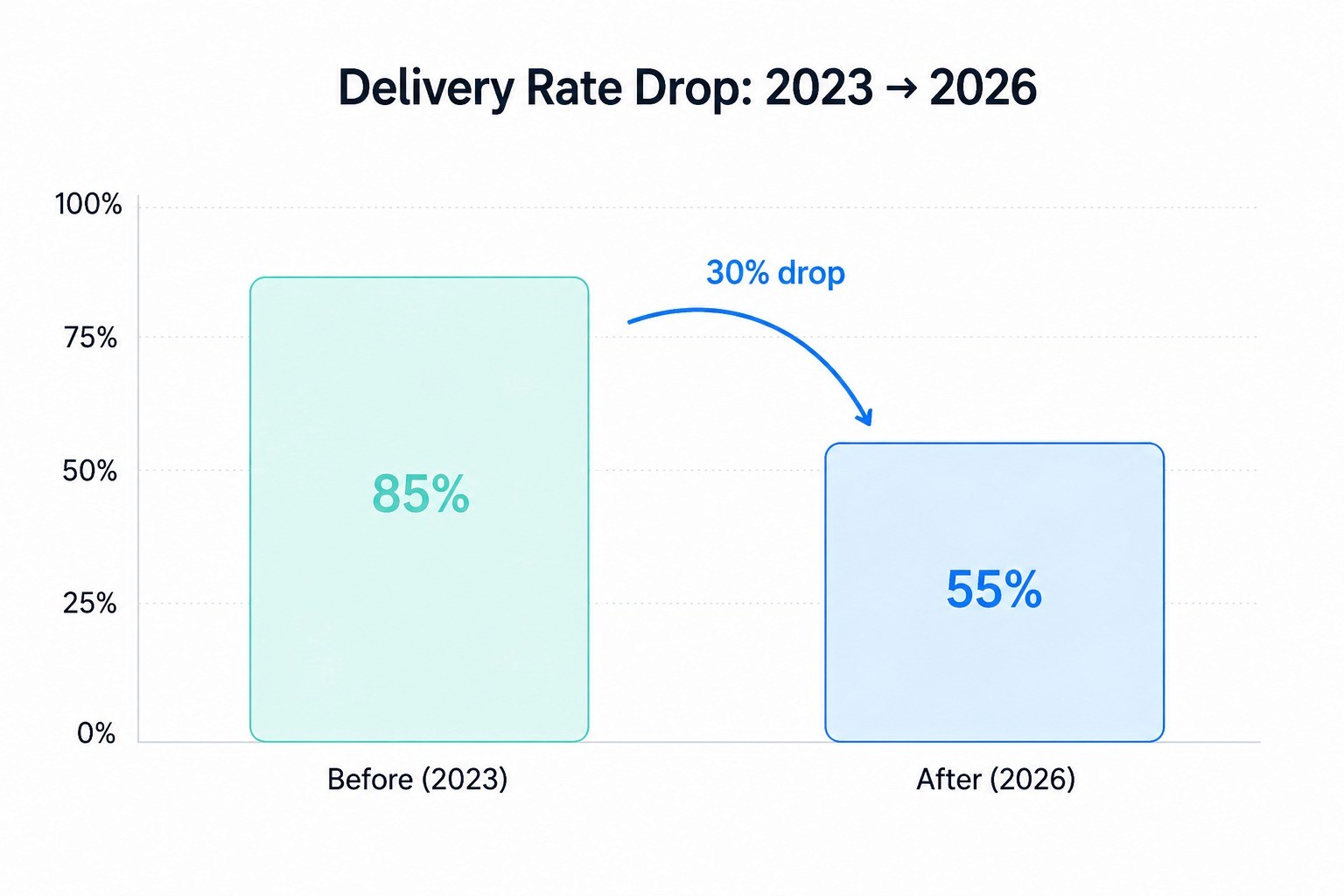
How frequency capping dropped delivery rates from 85% to 55% (and what to do about it)
If you’re a D2C brand in India running WhatsApp marketing, you’ve probably noticed something weird in the last few months: your delivery rates dropped. Hard.
Campaigns that used to hit 80-90% delivery are now stuck at 50-60%. Maybe even lower. And when you ask your CRM partner what’s going on, they mumble something about ‘Meta policy changes’ or ‘frequency capping’ and move on.
Here’s what’s actually happening and more importantly, what it means for your budget and your retention strategy.
The February 2024 Policy Change Everyone’s Dealing With
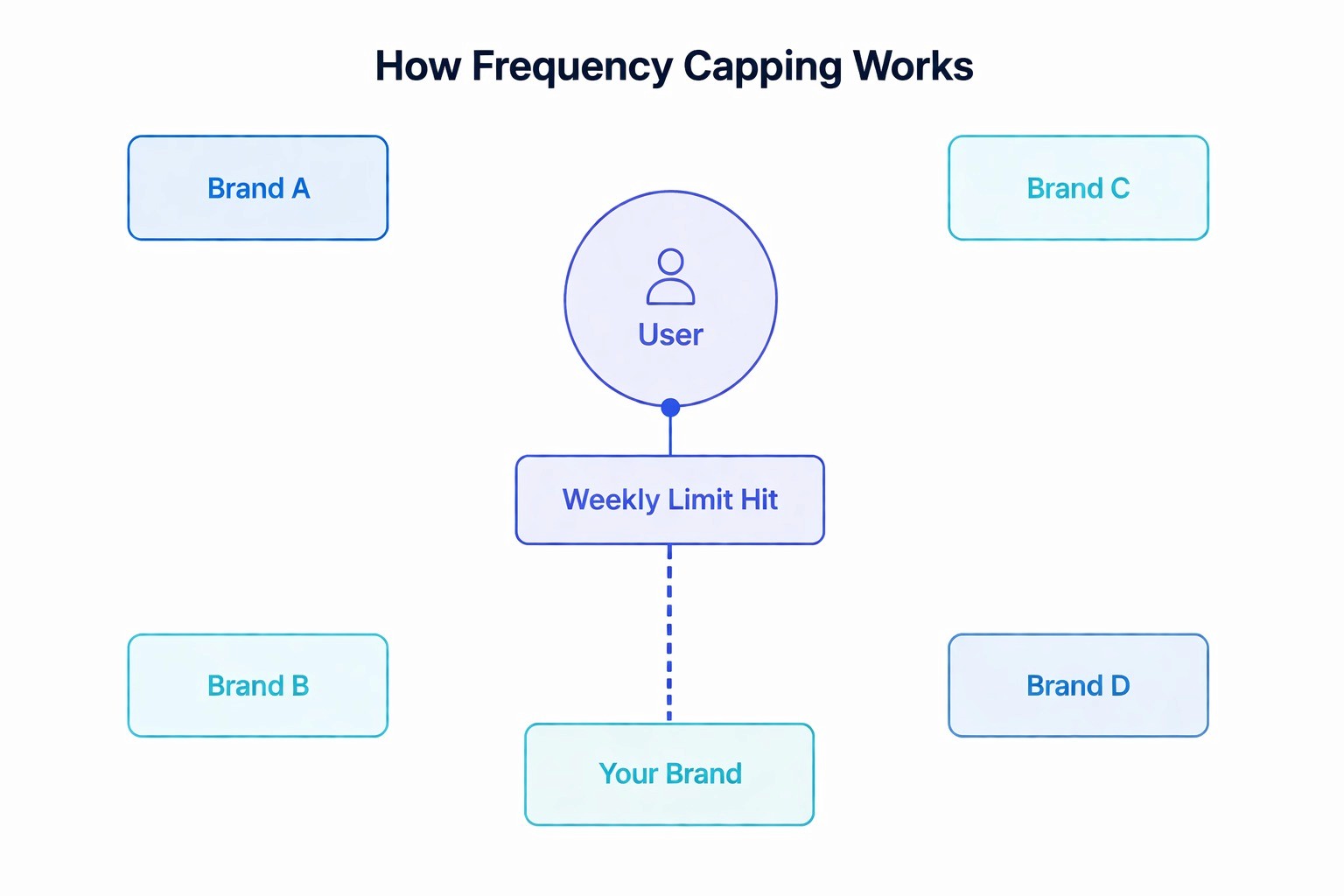
Meta introduced a new rule in February 2024 that fundamentally changed how WhatsApp marketing works in India. It’s called frequency capping, and it works like this:
Each user can only receive a limited number of marketing messages per week across ALL brands.
Not per brand. Total.
So if someone’s already received marketing messages from 5 other brands this week, your message might not get delivered even if they’ve never heard from you before. Your account health is fine, your segmentation is perfect, your timing is spot-on. Doesn’t matter. Meta’s already hit their weekly limit.
This is why brands that were seeing 80-90% delivery rates are now stuck at 50-60%. You’re not doing anything wrong. The rules changed.
What This Actually Costs You
WhatsApp pricing in India also increased in January 2026:
Old rate: ₹0.78 per delivered message
New rate: ₹0.86 per delivered message
That’s a 10% increase.
Good news: Meta only charges for delivered messages, not attempted sends. So you’re not getting hit with phantom charges for messages that don’t go through.
But here’s the real problem you need to understand:
You’re reaching 35% fewer people with the same segment size. And to make up for it, you need bigger segments, more campaigns, and more operational complexity.
Let’s break down the math:
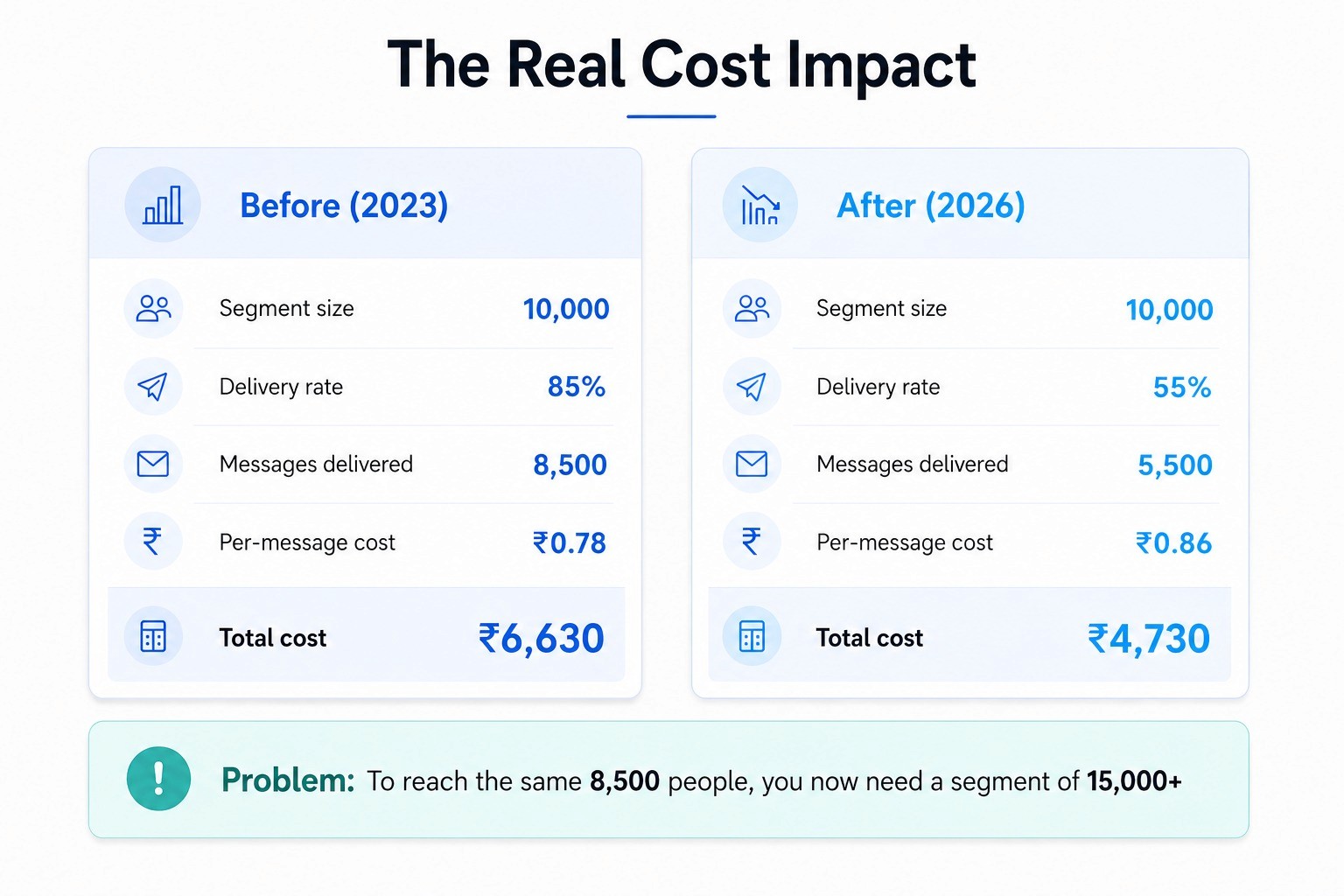
Before (2023):
10,000 contacts in your segment
85% delivery rate = 8,500 messages delivered
Cost: 8,500 × ₹0.78 = ₹6,630
Cost per delivered message: ₹0.78
After (2026):
10,000 contacts in your segment
55% delivery rate = 5,500 messages delivered
Cost: 5,500 × ₹0.86 = ₹4,730
Cost per delivered message: ₹0.86
On the surface, you’re paying less (₹4,730 vs ₹6,630) because you’re delivering to fewer people. The per-message cost only went up 10%.
But that’s not the full story.
To reach the same 8,500 people you used to reach, you now need to send to a much larger segment probably 15,000+ contacts instead of 10,000. Which means:
More time managing lists
More complexity in your segmentation
Potentially hitting frequency caps even faster (because you’re sending to more people)
Higher risk of tanking your account health if you’re not careful
And if you’re not tracking why messages are failing, you can’t even fix it.
Why Delivery Failures Aren’t All the Same
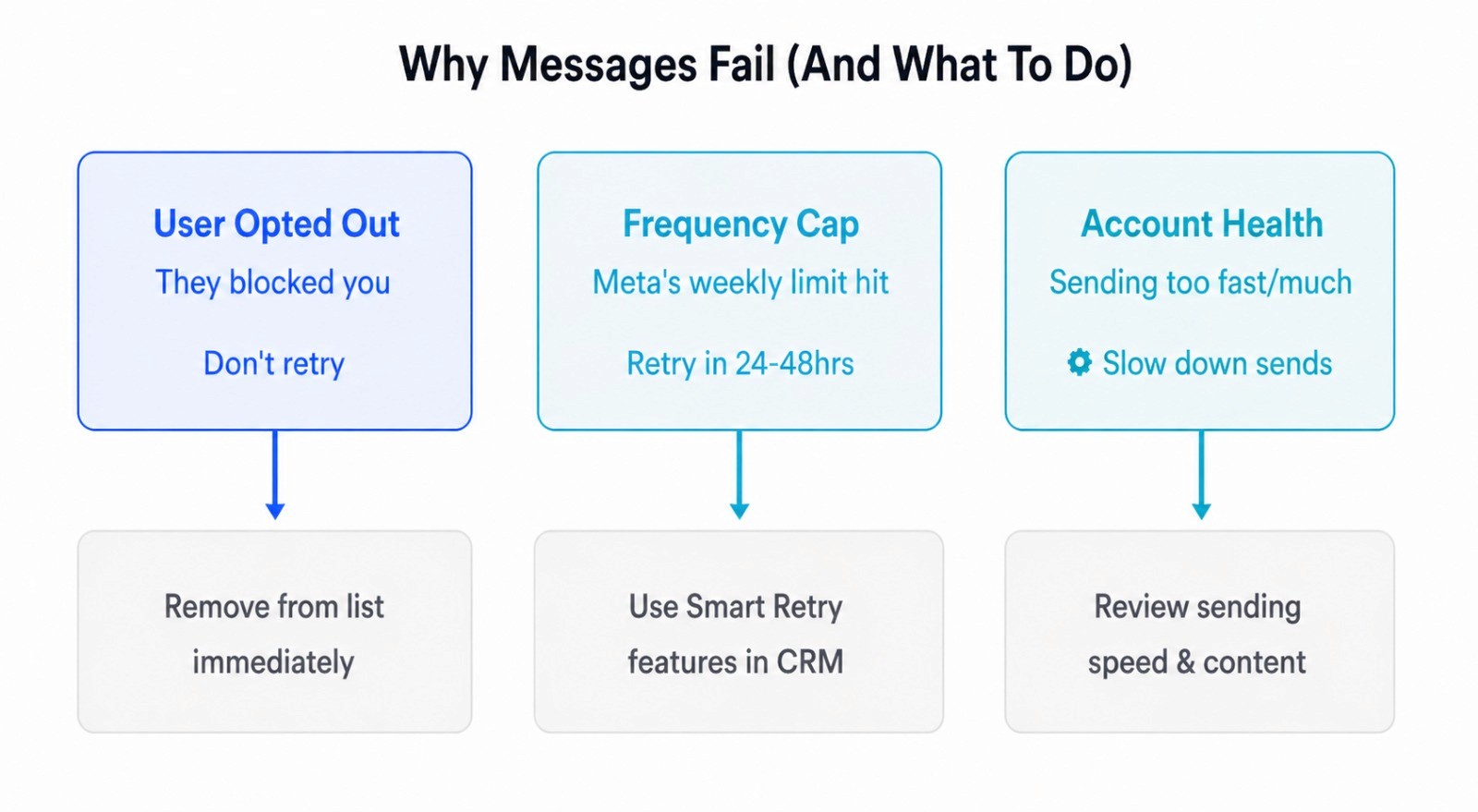
Here’s what most brands get wrong: they look at “deliverability rate” as one number and assume all failures are the same.
They’re not.
There are three completely different reasons a message might fail, and each one requires a different response:
1. The user opted out or blocked your number
What this means: They don’t want to hear from you. Fair.
What to do: Remove them from your campaigns immediately. Don’t retry. Don’t wait. Just stop sending to them.
2. The message failed due to Meta’s frequency cap
What this means: The user didn’t reject your message, Meta did, because they’ve already received too many marketing messages this week from other brands.
What to do: Retry 24-48 hours later when the weekly limit resets.
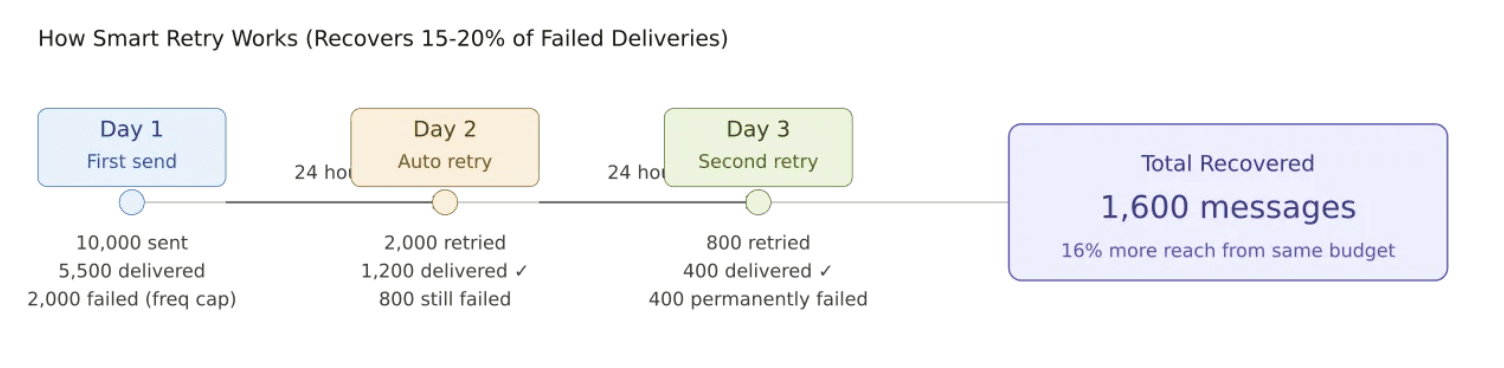
Platforms like Kwik Engage, BIK, and others now have Smart Retry features to help with this. You can set the timings (e.g., retry after 24 hours, then again after 48 hours) and the number of retry attempts. This is critical for recovering deliveries lost to frequency capping and most brands aren’t doing it.
3. Account health issues / technical errors
What this means: Your account is sending too many messages too fast, or your message violated Meta’s policies (even if you didn’t realize it).
What to do: Slow down send speeds, review message content, and monitor your account health score. If your messages are going to the notification tray instead of the primary chat, this is why.
If your CRM platform only shows you one “deliverability rate” number, you’re flying blind.
You need to know which category each failure falls into. Otherwise, you’re retrying opt-outs (which tanks your account health) or ignoring frequency-cap failures (which means you’re leaving money on the table).
What to Do About This Right Now
If you’re dealing with dropping delivery rates, here’s what fixes it:
Immediate fixes (this week):
Turn on Smart Retry in your CRM. If your platform supports it (Kwik Engage, BIK, etc.), enable automatic retries for frequency-capped failures. Set it to retry after 24-48 hours. This alone can recover 15-20% of your failed deliveries.
Stop sending to dormant users. If someone hasn’t opened a message in 90+ days, exclude them. They’re dragging down your delivery rate and killing your account health.
Segment by engagement level before every campaign. Don’t send to your entire database. Focus on people who’ve actually engaged in the last 30-60 days.
Strategic fixes (this month):
Track failure reasons, not just deliverability rate. Make sure your CRM breaks down why messages failed. If it doesn’t, ask for it or switch to a platform that does.
Monitor your account health score. If it’s dropping, you’re sending too much or too fast. Slow down.
Build an RCS fallback strategy. RCS costs ₹0.15-0.20 per message vs. WhatsApp’s ₹0.86. Use it for retargeting dormant users or as a backup when WhatsApp delivery fails.
Long-term fixes:
Clean your database regularly. If someone hasn’t engaged in 180 days, move them out of your active segments. You’re wasting budget trying to reach them.
Focus on quality over quantity. It’s better to send to 3,000 engaged users and get 75% delivery than to send to 10,000 users and get 55% delivery. Smaller, engaged segments win.
The Bottom Line
WhatsApp marketing in India changed in February 2024, and it’s not going back. Frequency capping is here to stay. Costs went up 10%. Delivery rates dropped 30-40%.
The brands that win in this new environment are the ones who:
Use Smart Retry features to recover frequency-capped failures
Segment ruthlessly and exclude dormant users
Track why messages fail, not just how many
Build multi-channel strategies (WhatsApp + RCS + email)
If you’re still treating WhatsApp like it’s 2022, you’re overpaying and underdelivering. Time to fix that.
Blog overview
If you’re a D2C brand in India running WhatsApp marketing, you’ve probably noticed something weird in the last few months: your delivery rates dropped. Hard.

Want help fixing your WhatsApp campaigns?
I work with D2C brands on retention strategy, segmentation, and CRM setup.
Contact us now