D2C

1. Problem Statement
When we began working with the brand, it was evident that retention was a largely underexplored area. Despite being in a high-repeat category like baby and parenting, the brand had several foundational gaps, including:
No structured retention journeys implemented.
WhatsApp was not being effectively used as a revenue or lifecycle channel
Customer communication was highly limited to transactional updates
No CRM or automation tool existed to manage lifecycle messaging
Retention revenue contribution was effectively close to zero
However, the category itself also came with real-time challenges such as:
Parents are emotionally overwhelmed and short on time
Bombarding them with messages can lead to quick opt-outs
Aggressive discounting risks long-term brand credibility
What parents need changes rapidly as their baby grows
The central problem wasn’t just “low retention.” It was how to build retention without spamming, over-discounting, or overwhelming already over-stimulated parents.
Step 1: Laying the Foundation
Bik.ai as the CRM and WhatsApp Automation Platform was introduced
Established WhatsApp as a lifecycle channel, with accountability as our first priority.
A conscious decision to not use email initially was made, keeping the effort focused on a single, high-attention channel.
We prioritised reliability, trust, and clarity before pushing repeat purchases.
Overall orders reached 4.1K, reflecting a 102% increase (+2.05K), out of which Bik contributed 378 orders, accounting for 9.2% of total orders.

Step 2: Building Core Journeys First
Our focus was shifted to essential hygiene journeys to plug obvious leaks such as:
Order updates (confirmation to delivery)
Abandoned checkout, cart, and browse flows
Welcome journey on WhatsApp opt-in
Post-purchase thank-you and check-in messages
COD confirmation and prepaid nudges
Post core-journey rollout, overall revenue reached ₹83.5L (+152%), with Bik contributing ₹8.25L (9.9%) .

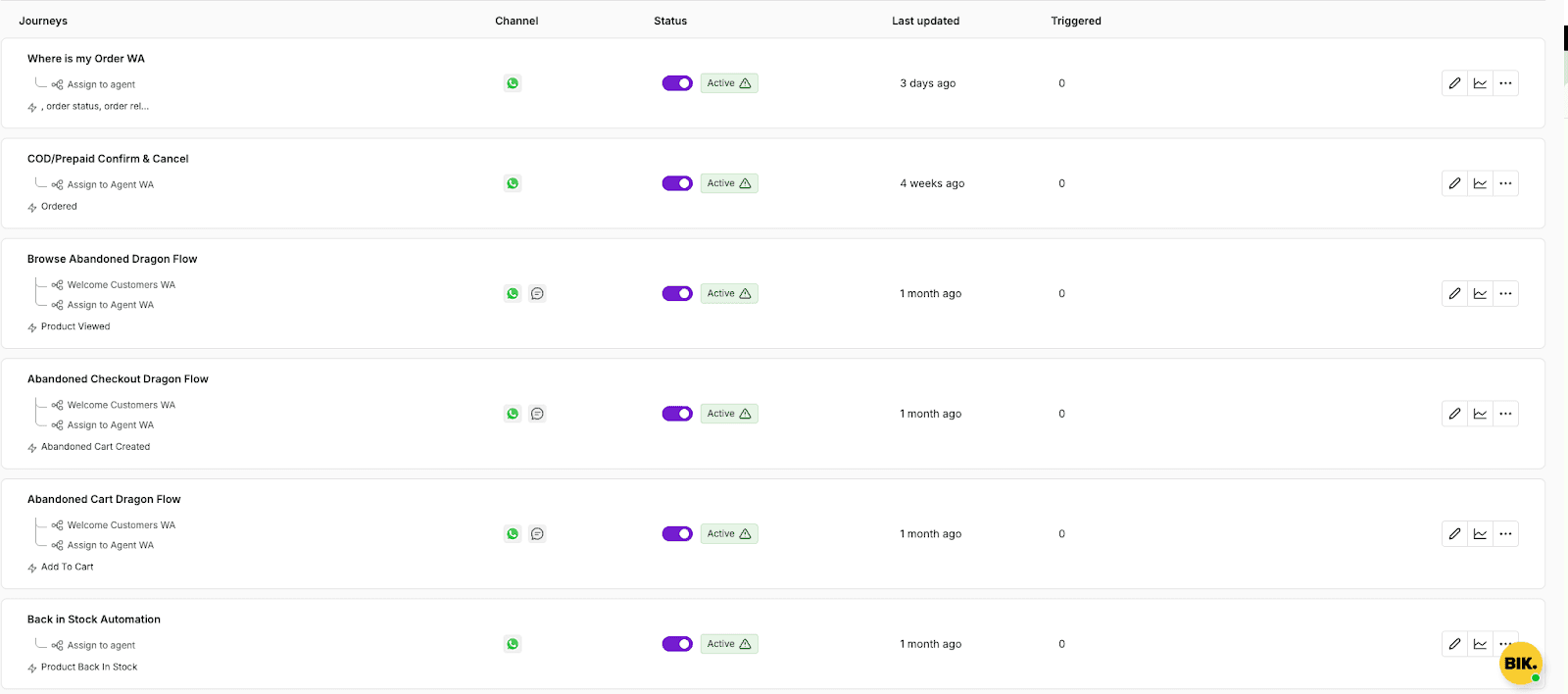
This image illustrates the core hygiene journeys actively implemented across the customer lifecycle to reduce drop-offs and strengthen conversion.
Step 3: Segmentation Before Scale
Once the basic hygiene journeys were in place, the next step was to make messaging more relevant for parents. Instead of sending generic updates, we grouped parents based on behaviour and value. As hygiene, these are the segments we created based on RFM:
High Spender
Mid Spender
Low Spender
Recently Active vs Lapsed
COD vs Prepaid Buyers
Category Preferences (furniture, essentials, fashion, gifts)
This approach allowed for the right messages to reach the right individuals, reducing fatigue while keeping communication personalised.
Step 4: Layering Intent and Restock Logic
Once the foundation was stable, we expanded into more targeted, intent-driven flows. This included:
Personalized post-purchase product recommendations
Diaper restock reminders based on pack size and usage
Back-in-stock alerts
Drip campaigns for engaged users who hadn’t converted
Category-specific winback campaigns
Parenting-led journeys were introduced by asking parents their child’s age and placing them into tailored flows (Expecting, 0–12 months, and Gift Buyers).
Throughout, campaigns were used sparingly, always to support the journeys rather than replace them, keeping communication relevant and helpful.
Results
These were the advancements observed within just a few months of rollout: ‘
The brand now had a repeatable, scalable retention system, rather than relying on one-off campaigns, giving them a foundation they could expand on confidently.
WhatsApp-led engine that contributed around ~10% of total revenue
Read rates between 70-85% and ROAS reaching up to 15x.
Out of the total 39.7k orders, our retention plan helped acquire 29.85K customers. The magnitude of growth indicates that the strategy efficaciously converted latent demand into active customers.

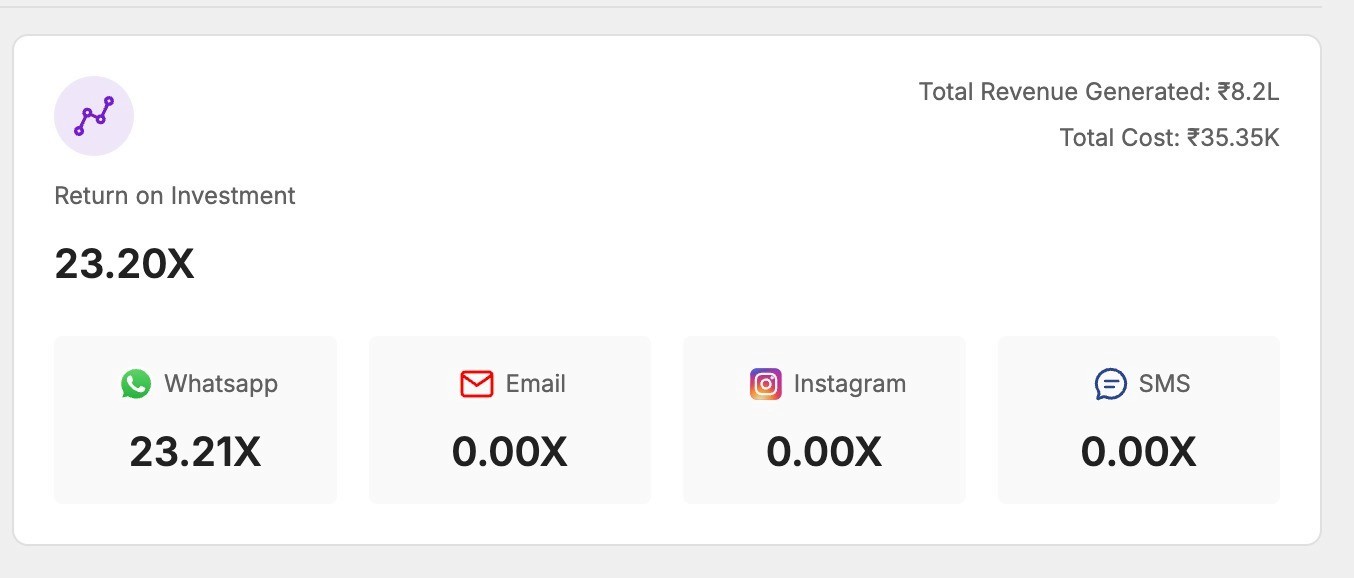
ROI analysis indicating ₹8.2L in total revenue against ₹35.35K in total cost, resulting in an overall ROI of 23.20×, with WhatsApp-specific ROI at 23.21×.
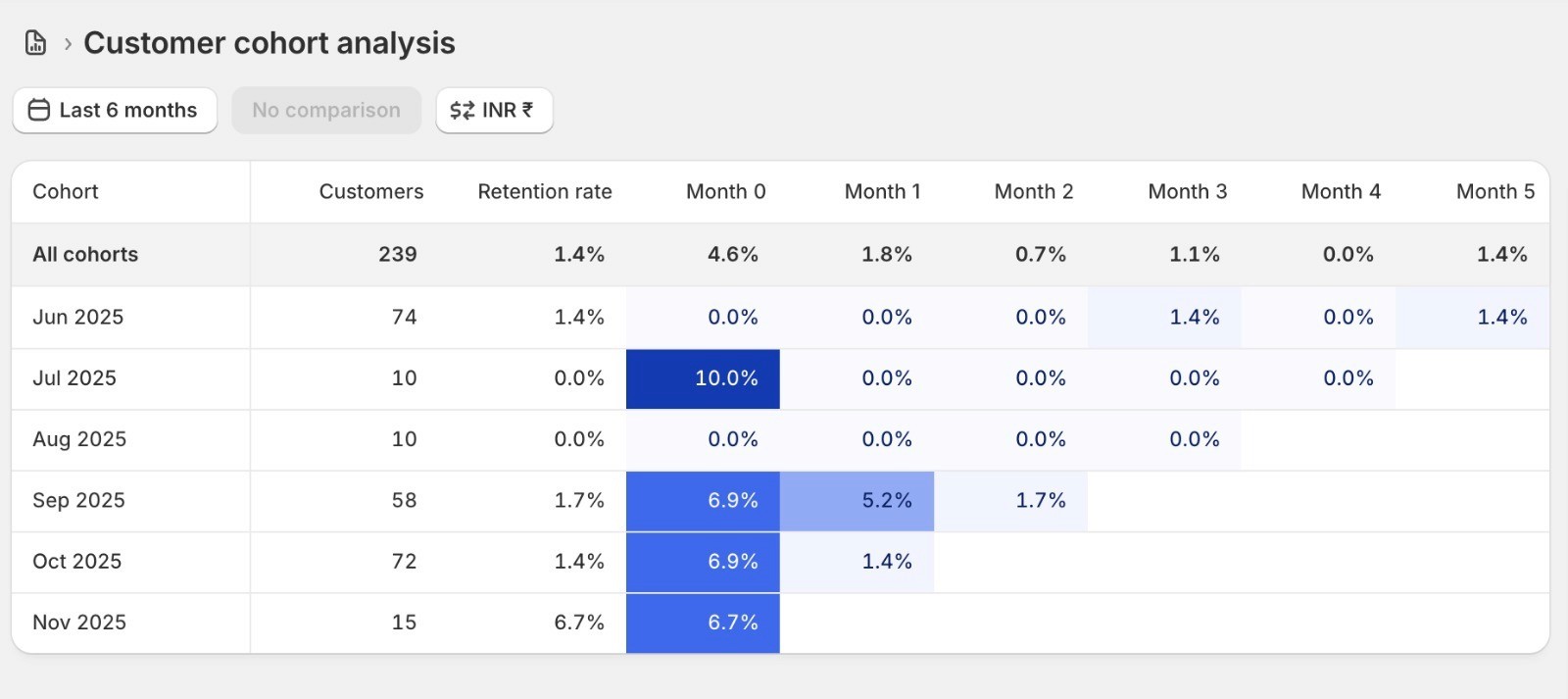
Cohort analysis displaying improving customer retention and sustained revenue contribution across successive cohorts.
Building retention in the parenting category came with major constraints. Parents are highly sensitive to message overload, timing matters more than frequency, and educational or emotional content often outperforms discounts. We addressed these by:
Introducing phased rollouts instead of big-bang launches
Regularly reviewing engagement and drop-offs
Initiating SMS only when WhatsApp delivery failed
Continuously refining journeys based on available data
The biggest learning: Retention works best when it feels like guidance, not marketing.

Engagement review across core journeys, showing metrics on journeys triggered, leads closed, messages sent, click rate, read rate, and unique customers.