
Problem Statement
Both collection and product pages were optimised with a strong focus on real customer concerns. Through research, we discovered the most common concerns parents experience during the buying process and ensured these were addressed clearly within product descriptions and collection page content.
The content was written to answer questions, reduce uncertainty, and help customers feel secure in their decisions.
Strengthening Technical SEO for Product Pages
For allowing discoverability and facilitating search engines to properly interpret and retrieve product details, we improved our overall technical SEO infrastructure on the site. Here’s how we did it:
Schema Markup Implementation
Structured data was added using Product Schema to provide search engines with clear details such as price, availability, and customer reviews. This allowed for richer, more informative listings to get readily displayed.URL Redirections
301 redirects were implemented for outdated or discontinued product URLs to prevent broken links and preserve search engine rankings. Where products were no longer available, users were seamlessly redirected to relevant or similar product pages.404 Page Monitoring and Optimisation
Regular monitoring helped identify and resolve 404 errors, ensuring all product and collection pages remained accessible. Custom 404 pages were also implemented, guiding users back to popular products or key categories instead of losing them entirely.PAA (People Also Ask) Creation and Gen AI Search Engine Optimisation
We introduced FAQs across product and collection pages, focusing on real customer concerns and buying questions.
Content was structured to match:
How parents actually ask questions to our marketing team, and the most common concerns raised in retail stores
Conversational queries
Question-based search behaviour
This helped align the pages with AI-driven search results and voice search patterns, improving relevance and engagement.
Implemented descriptive product titles with a focus on features that attract customers who are looking for specific features

Content Structuring for AI and User Intent
Product and collection pages were restructured to:
Constantly answered the questions that the customers ask while purchasing the product
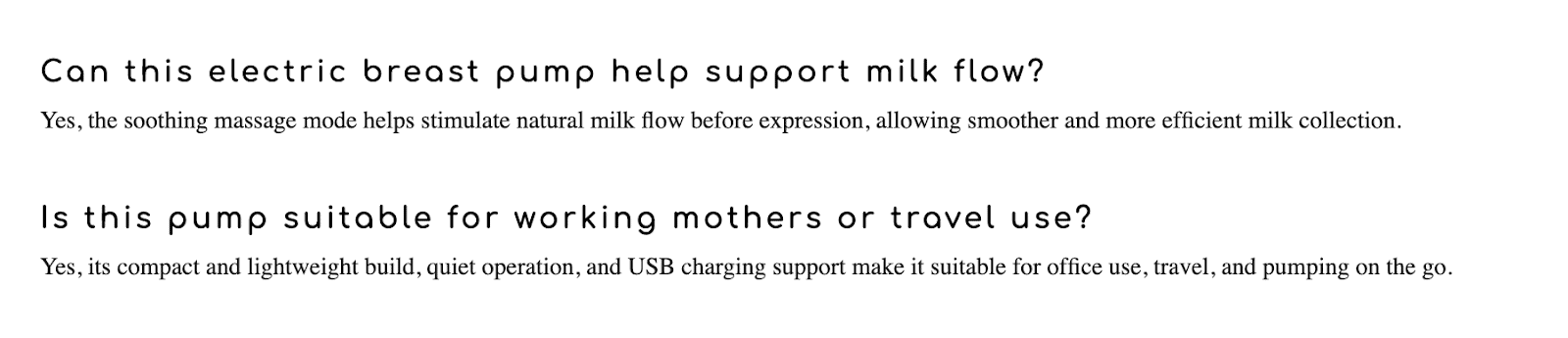
Clearly answer common customer prompts
Highlight benefits in a scannable format
Reduce decision friction
This made the content easier for:
Users to understand
Search engines and AI systems to interpret
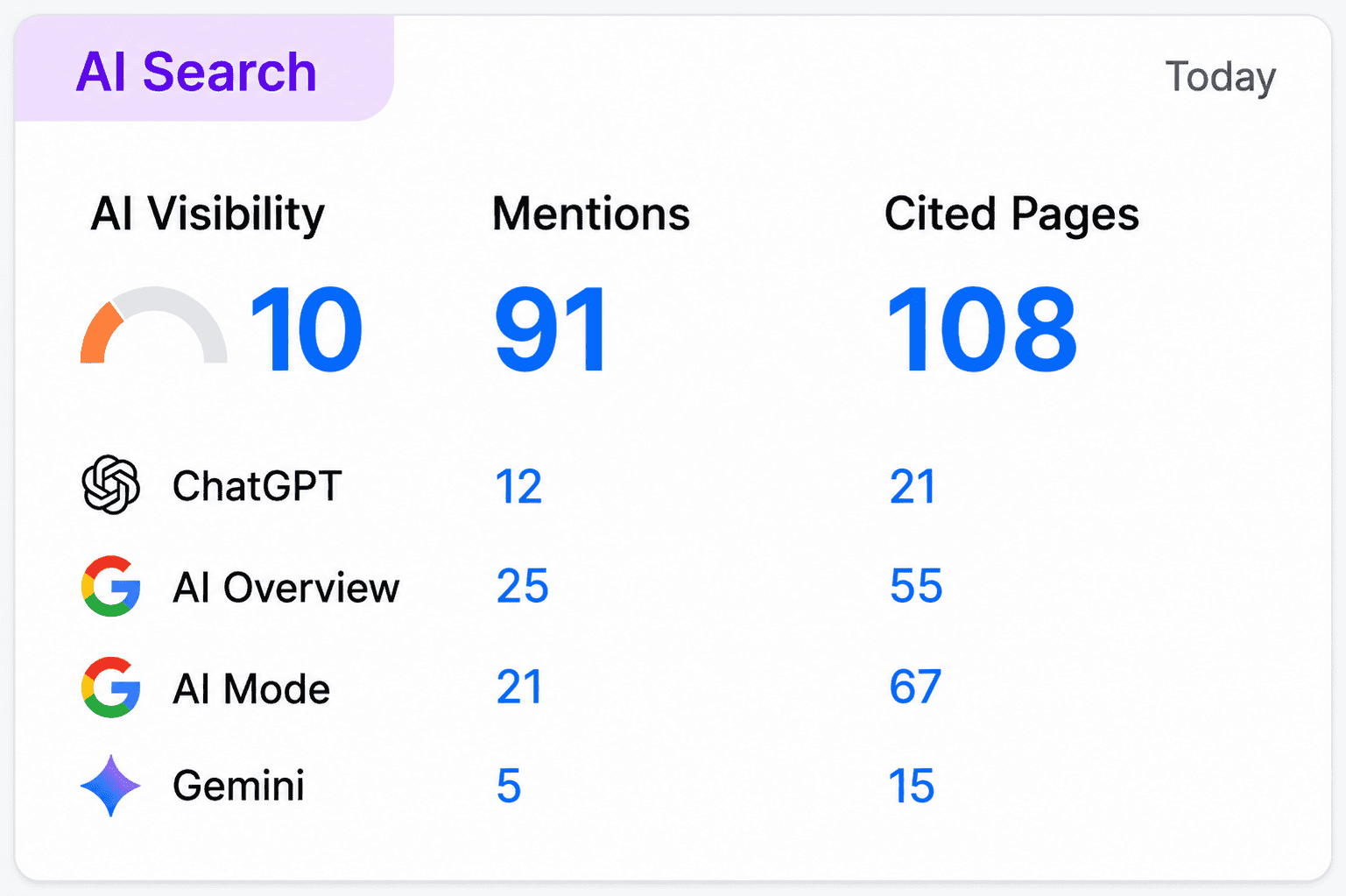
Before GEO:
After GEO:
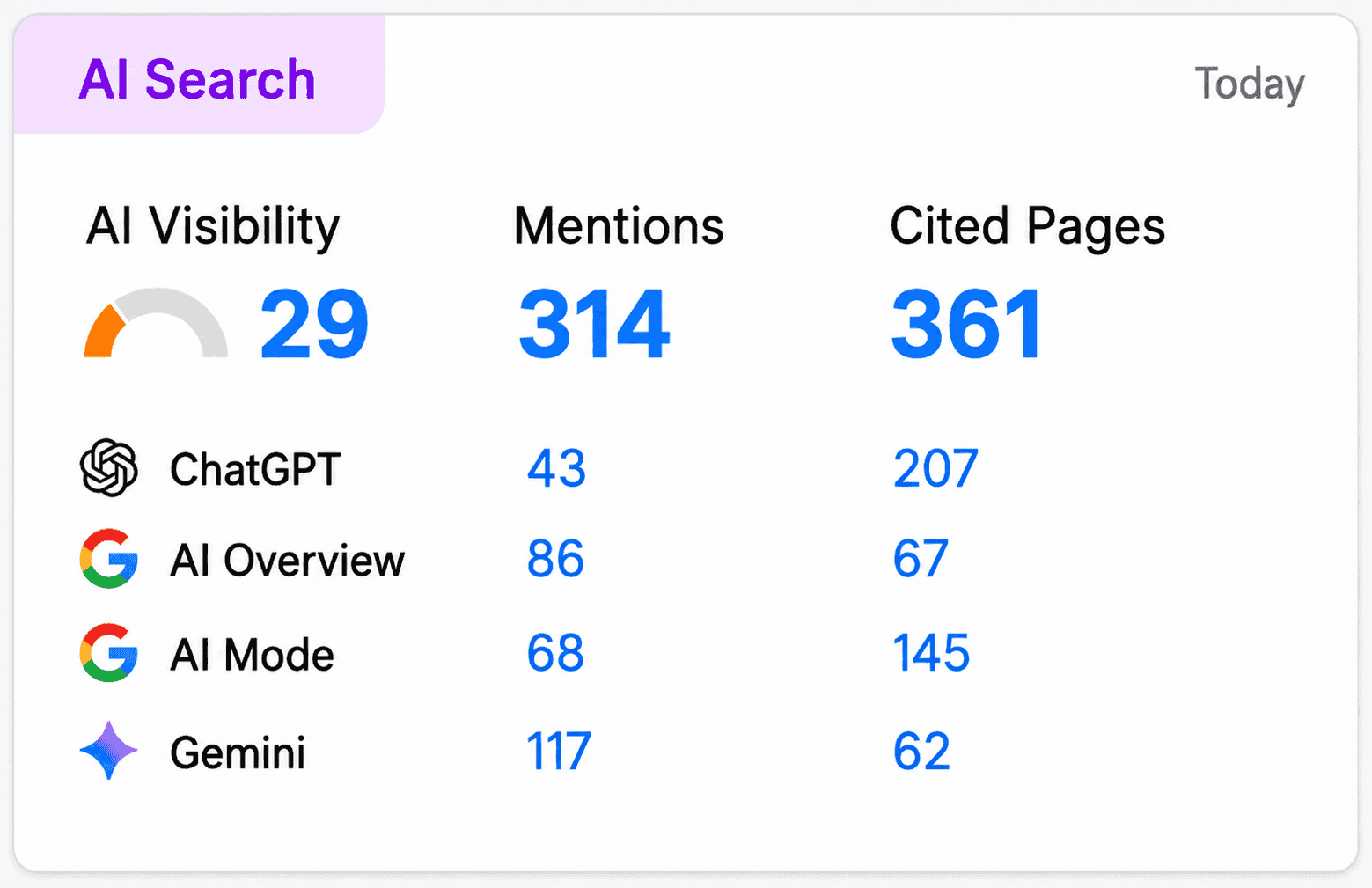
Results
BABY COTS:
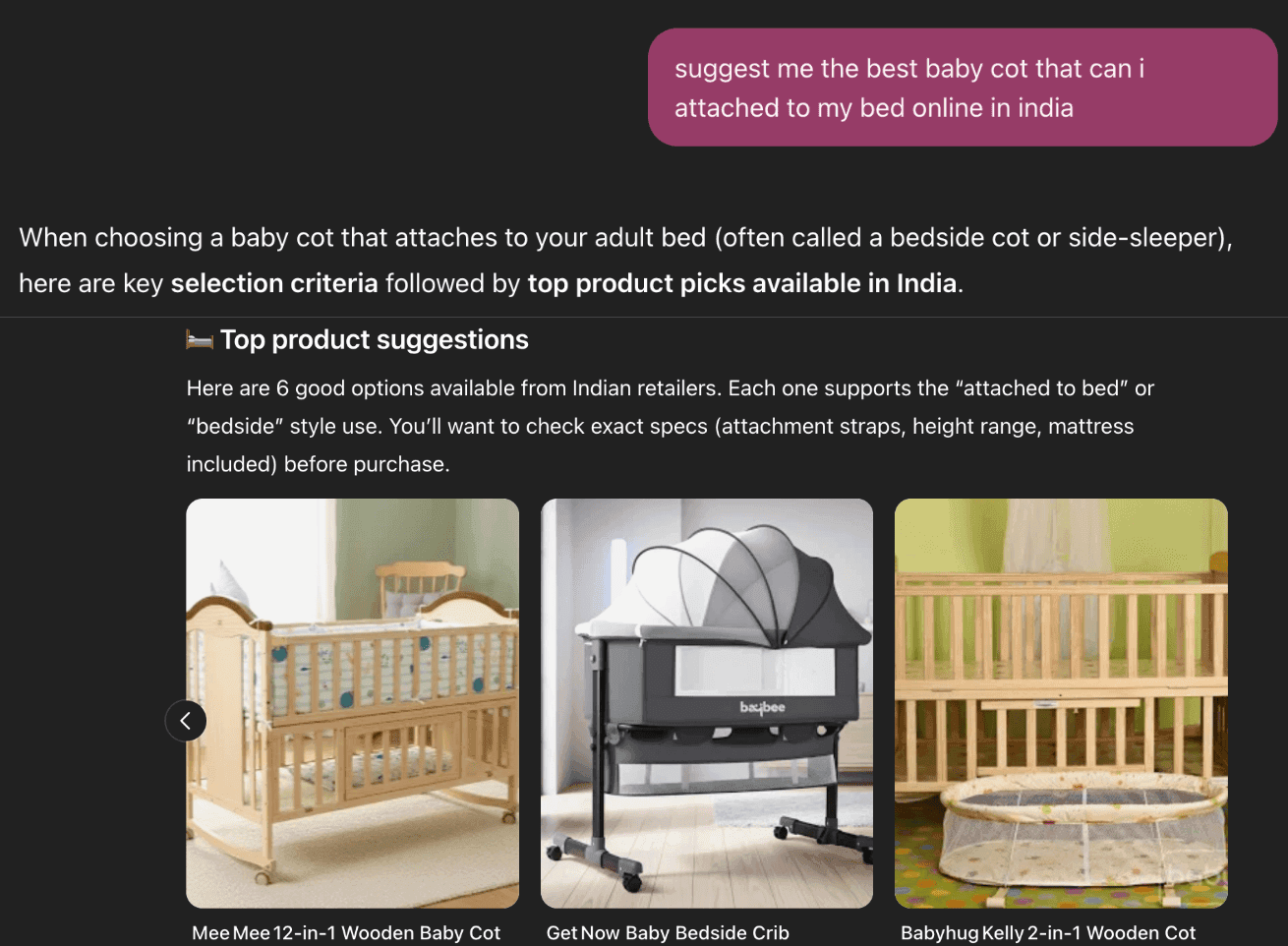
MATERNITY WEAR:
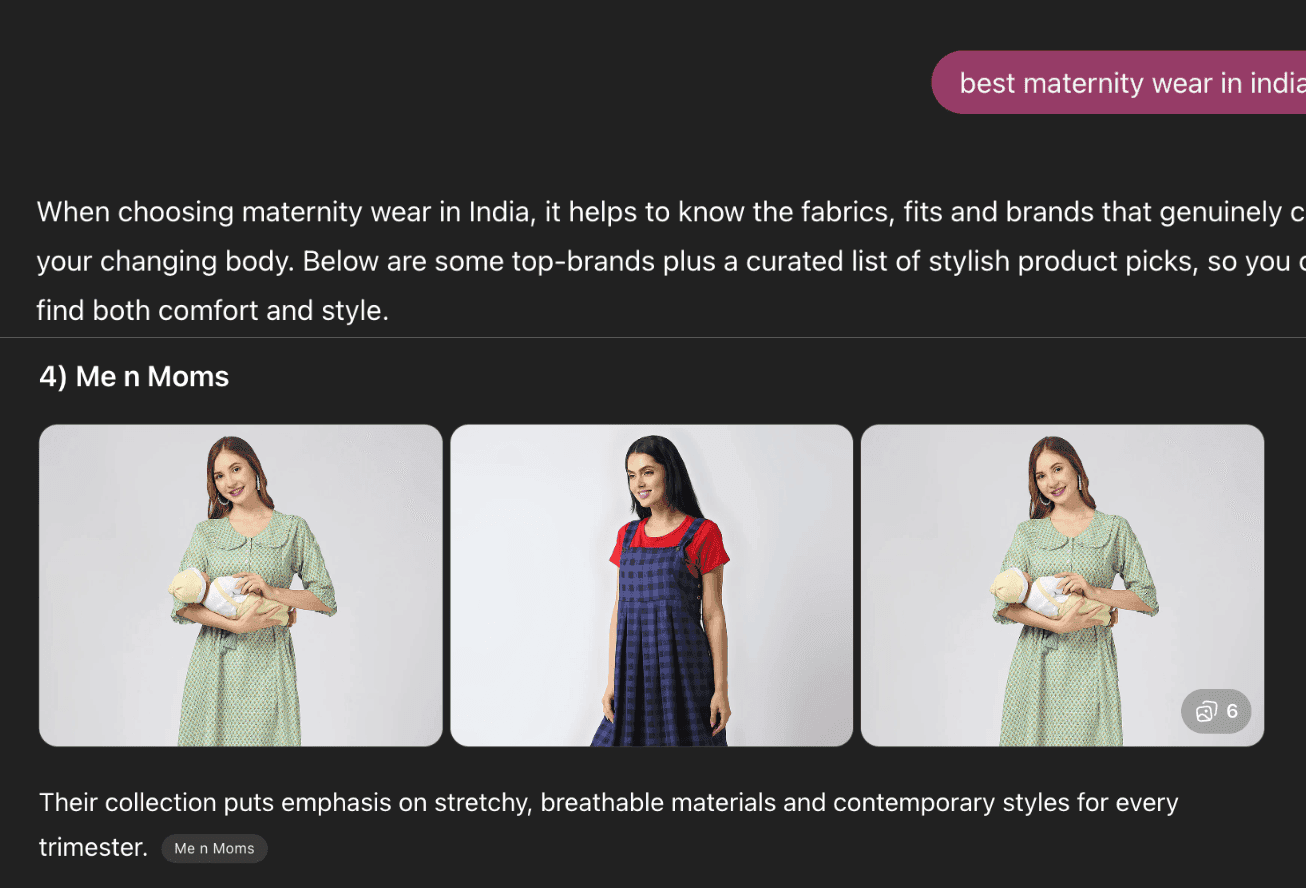
STEEL FEEDING BOTTLES:
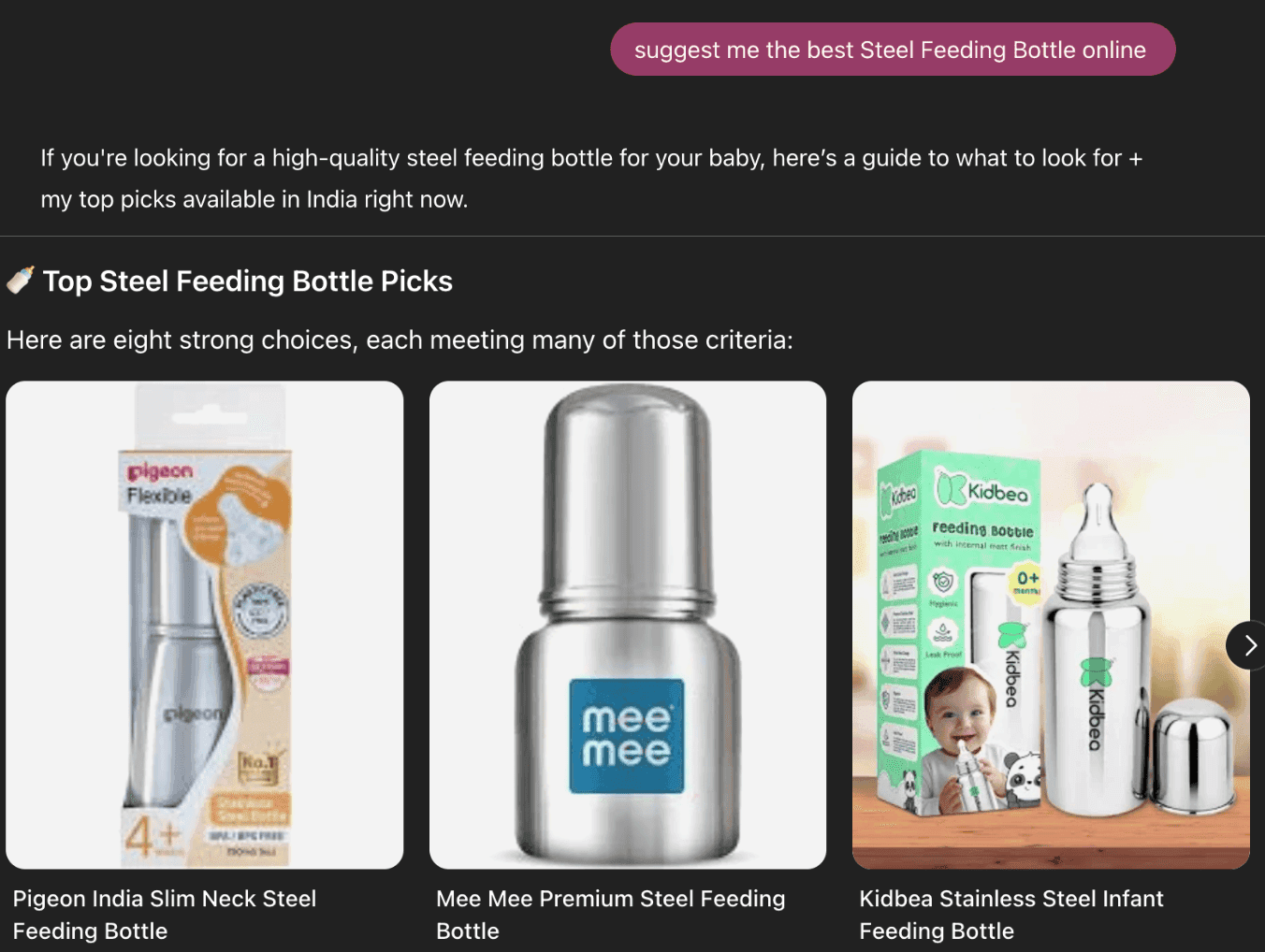
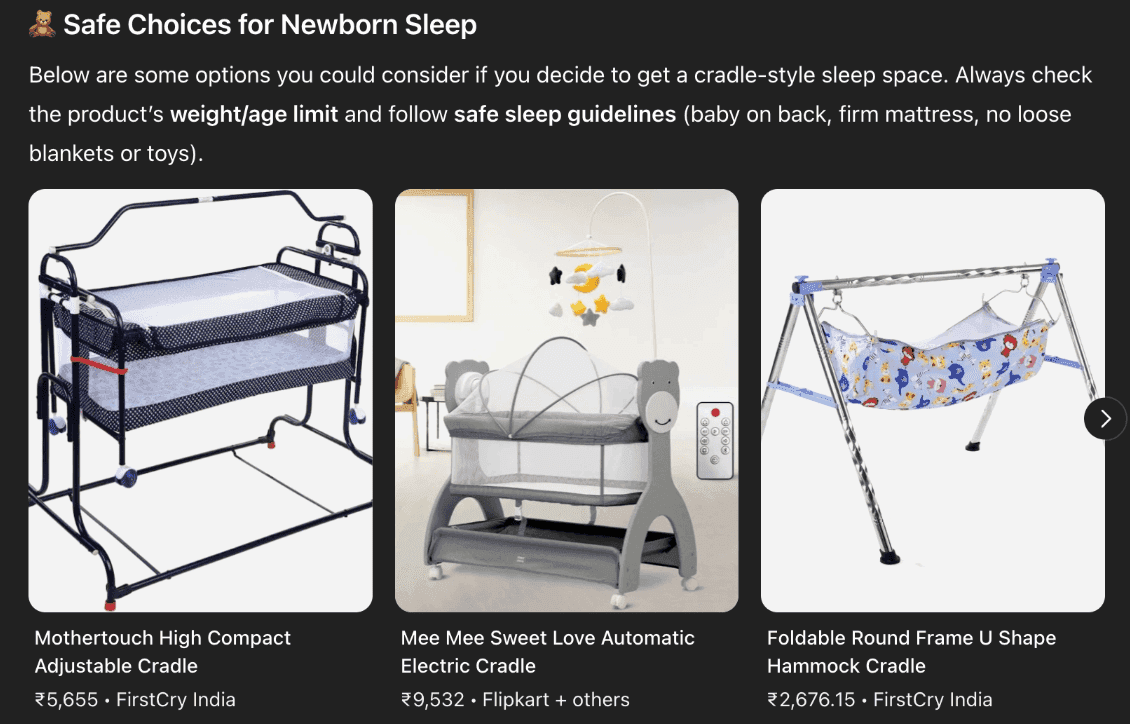
BABY COTS:
ELECTRIC CRADLES:
Great SEO is quite a bit like good parenting advice. It only works when it addresses a real concern. That was precisely the thinking behind every technical and content decision that we made.
Fixing broken redirects, resolving 404 errors or implementing schema markup. None of it is glamorous work, but it matters enormously. A parent who lands on a broken page or a vague product description does not wait around. They get frustrated, leave, and buy their necessities elsewhere.
The FAQs and conversational content structures are not just for search engines. They came directly from the questions parents were already asking in retail stores, to marketing teams, and in the comments section. We took those real voices and made sure they were answered before anyone had to ask twice.
That is what GEO-focused optimisation actually looks like in practice. Not keyword stuffing dressed up in new language, but content that genuinely reflects how people search, think, and decide in 2026.